Case study: deploying an on-premises operational intelligence workspace for an Australian government agency client. Intelligence Holdco led configuration, integration, and accreditation support. Outcomes describe operational and assurance improvements—not policy or political results.

Client context
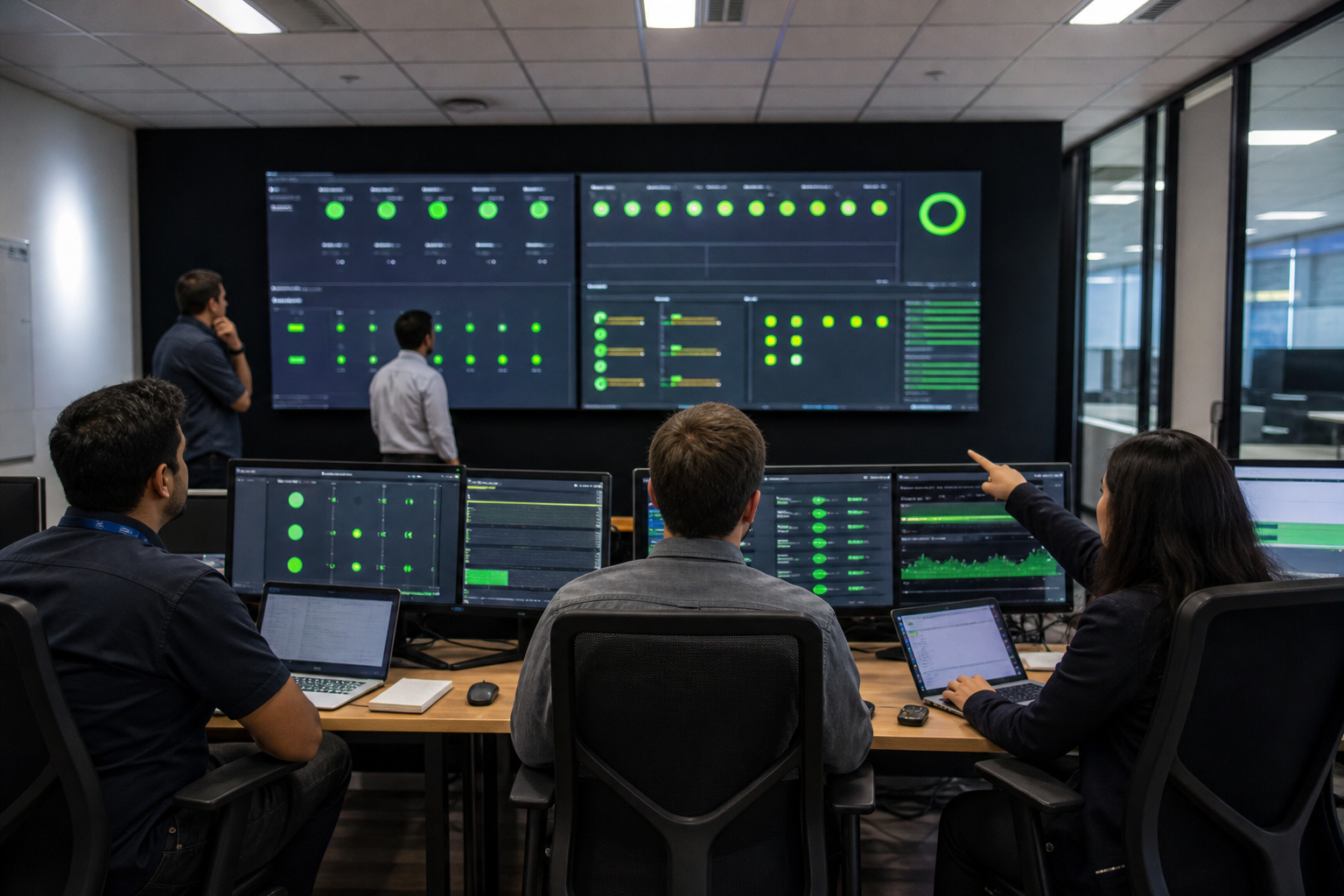
The agency fused information from five operational systems to produce daily situational briefings. Analysts spent hours reconciling exports in desktop tools; version control was informal.
Classification requirements prohibited use of public cloud analytics for primary workflows.
Problems encountered
Duplicate entity identifiers caused missed links between incidents and assets.
Briefing slides could not be reproduced from authoritative queries during audit interviews.
Peak event days overwhelmed manual processes; supervisors lacked queue visibility.
Our approach
We ran discovery workshops mapping sources, fields, classification, and recipient roles. Architecture selected message bus ingestion, entity store, and governed export service.
Phased rollout started with read-only correlation before write-back automations were allowed.
Implementation measures
SAML SSO integrated with agency identity; privileged admin actions logged to central SIEM.
Pilot rules focused on two mission areas with measurable precision/recall targets.
Training emphasised lineage discipline—analysts could not export without selecting a saved query snapshot.
Technical challenges
Legacy APIs throttled nightly batches; we negotiated rate limits and implemented adaptive backoff.
One source changed schema without notice; contract tests alerted operations before dashboards broke.
Outcomes
Median briefing preparation time decreased materially across pilot teams.
Audit requests received reproducible export bundles within agreed timeframes.
Supervisor queue dashboards reduced ad hoc status meetings.
Intelligence Holdco view
Government clients succeed when accreditation evidence is planned alongside features—not bolted on before go-live.
We remain available for enhancement phases under separate statements of work.
Client identity and technical environment details are anonymised. Outcomes describe operational improvements—not securities performance.
Collaboration model
Joint steering committees met fortnightly with decision logs published within twenty-four hours.
Product owners from the client had direct access to backlog prioritisation workshops.
Lessons retained
Playbooks updated after go-live incorporated lessons from hypercare tickets.
Internal Holdco knowledge base entries anonymised for future proposals.
Risk management during delivery
Delivery risks—vendor delay, key illness, environment access—tracked in RAID logs shared with steering committee.
Knowledge transfer metrics
Training attendance and runbook exercises measured before hypercare sign-off.
Post-go-live support
Thirty-day hypercare included standard; extension priced in change requests if needed.
Next steps
Email connect@intelligenceholdco.com or use Request a proposal for a scoped discussion.
Include deployment constraints, user counts, integration inventory, and assurance timelines with your enquiry.
Material on this website is general information about Intelligence Holdco enterprise software and services. It is not financial product advice, a securities offer, or a binding procurement commitment.